Québec Ecological Corridors: supporting resilience against climate change and biodiversity loss
Québec, CanadaAs biodiversity declines and climate impacts intensify, Québec is rethinking how natural areas can be more efficiently conserved in the long-term with ecological corridors. Through the Québec Ecological Corridors Initiative (QECI), launched by the Nature Conservancy of Canada (NCC) and its conservation partners, the province is using nature-based solutions to address biodiversity loss, climate adaptation, and resilience to natural hazards.
The initiative brings together provincial and municipal governments, researchers, local and regional organizations and communities, as well as land users to restore linkages between natural areas, support species movement, and translate global biodiversity targets into coordinated action on the ground. The Government of Québec plays a central role by providing strategic and policy alignment as well as critical financial support.
Along the St. Lawrence River, an area of critical importance to numerous species including migratory birds, Québec’s southern landscapes are highly fragmented and dominated by private land ownership. These areas face significant biodiversity pressures and include key migration routes for species adapting to climate change. Under this context, maintaining and restoring ecological connectivity is essential to strengthening ecosystem resilience. However, this cannot be achieved through isolated, site-based conservation alone and requires coordinated planning across jurisdictions and sectors, and the integration of connectivity into land-use planning and decision-making (GBF Target 1).
The Government of Québec holds the legislative authority when it comes to conserving and restoring habitats, as well as guiding and harmonizing land-use planning and development throughout the territory. Key strategies and policies to do so include Québec’s 2030 Nature Plan and associated 2024–2028 Action Plan, as well as the updated version of Government Land-use and Planning Guidelines, which came into effect in 2024 to ensure that all Regional County Municipalities integrate habitat conservation and ecological connectivity, among other considerations, when they update their Land-use and Development Plans by 2027. In addition to this strategic and policy alignment, the Government of Québec recognizes the intervention of numerous players on the ground is essential when it comes to maintaining ecological connectivity throughout the territory and therefore provides continued financial support to the Quebec Ecological Corridors Initiative (QECI).
The Québec Ecological Corridors Initiative
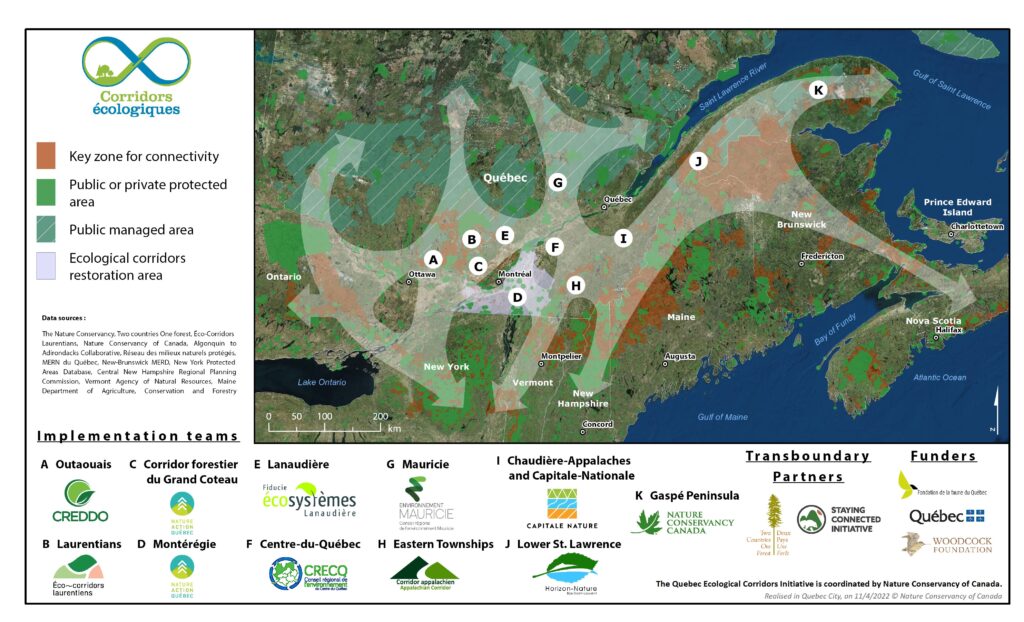
Launched in 2017 by the Nature Conservancy of Canada (NCC), the QECI operates across 11 administrative regions and promotes coordinated land-use planning to conserve natural and cultural heritage while supporting climate adaptation. The initiative is led by a coalition of environmental organizations and supported by more than 100 experts and stakeholders from research, government, Indigenous communities, watershed associations, forestry and agriculture, and civil society.
Its main objective is to accelerate the conservation of connected natural areas in southern Québec, where ecological corridors are essential to maintaining a rich biodiversity (GBF Targets 1, 2 and 3) and enabling species to move in response to climate change (GBF Target 8). Given the diversity of land uses and governance contexts, the initiative relies on a bottom-up, whole-of-society approach that aligns actions around a shared vision.
This initiative contributes to reaching several of Québec’s 2030 Nature Plan 14 targets, which echo most of the Global Biodiversity Framework targets. In parallel, the Government of Québec is developing its own monitoring framework through consultations with government ministries, academia, and Indigenous communities, nations, and organisations. This process, which strengthens accountability, learning, and adaptive management, is reaching its final steps in 2026, and the resulting set of indicators should include a measure of habitat fragmentation in southern Québec. The lasting results the QECI contributes to should be reflected in the stabilization, or even reduction, of habitat fragmentation in key parts of the territory in the long-term, indicating a better connectivity of ecosystems.
Embedding connectivity into territorial governance
The Québec Ecological Corridors Initiative promotes an ecosystem governance model that recognizes the complexity of socio-ecological systems and fosters collaboration across local, regional, provincial, and national levels. It supports municipalities, woodlot owners and other landowners, farmers, and a variety of local partners who play a strategic role in land use.
Rather than treating connectivity as a standalone conservation issue, the initiative works with partners to integrate land protection, restoration, and stewardship into planning frameworks and sectoral practices.
Key actions include:
• Identification and validation of ecological corridors using scientific and local knowledge
• Integration of connectivity into regional and municipal land-use planning tools.
• Development of practical online toolkits for woodlot owners, farmers, and local and regional planning authorities
• Land protection, restoration, and stewardship activities
• Outreach, empowerment, and engagement of local communities
• Road-ecology solutions and policy initiatives to reduce wildlife mortality
This approach allows ecological connectivity to be addressed consistently at the landscape-scale while remaining adaptable to local contexts.
Results achieved since 2017
Since its launch, the Initiative has delivered outcomes that contribute directly to the implementation of both Québec’s 2030 Nature Plan and the GBF:
• A multi-sector network of over 100 experts, strengthening coordination and knowledge exchange across sectors and governance levels
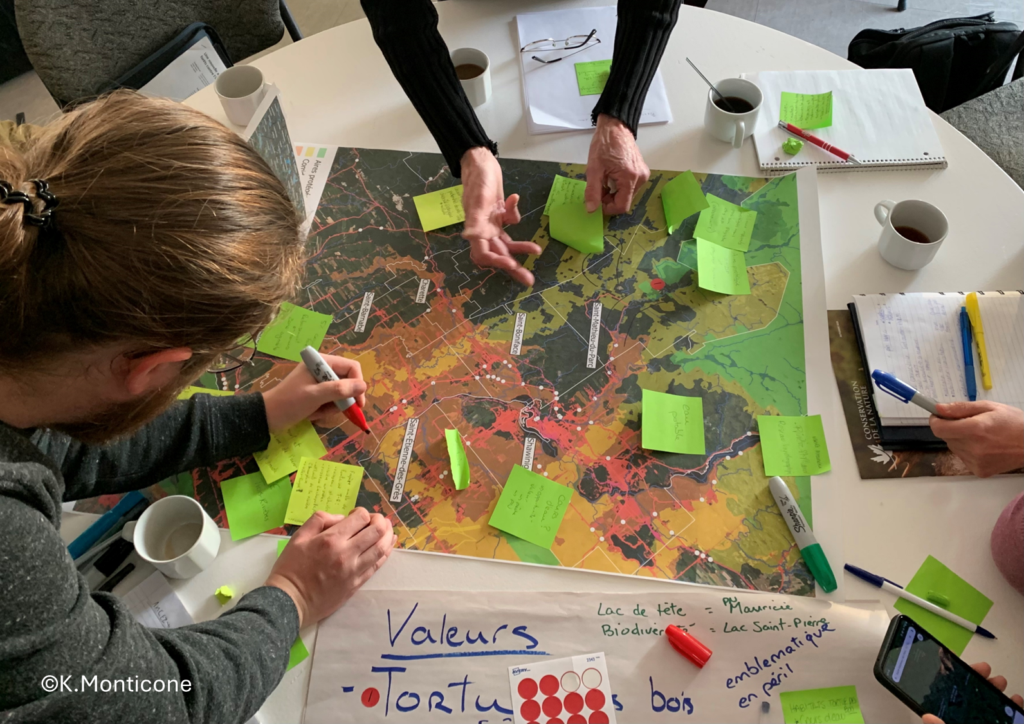
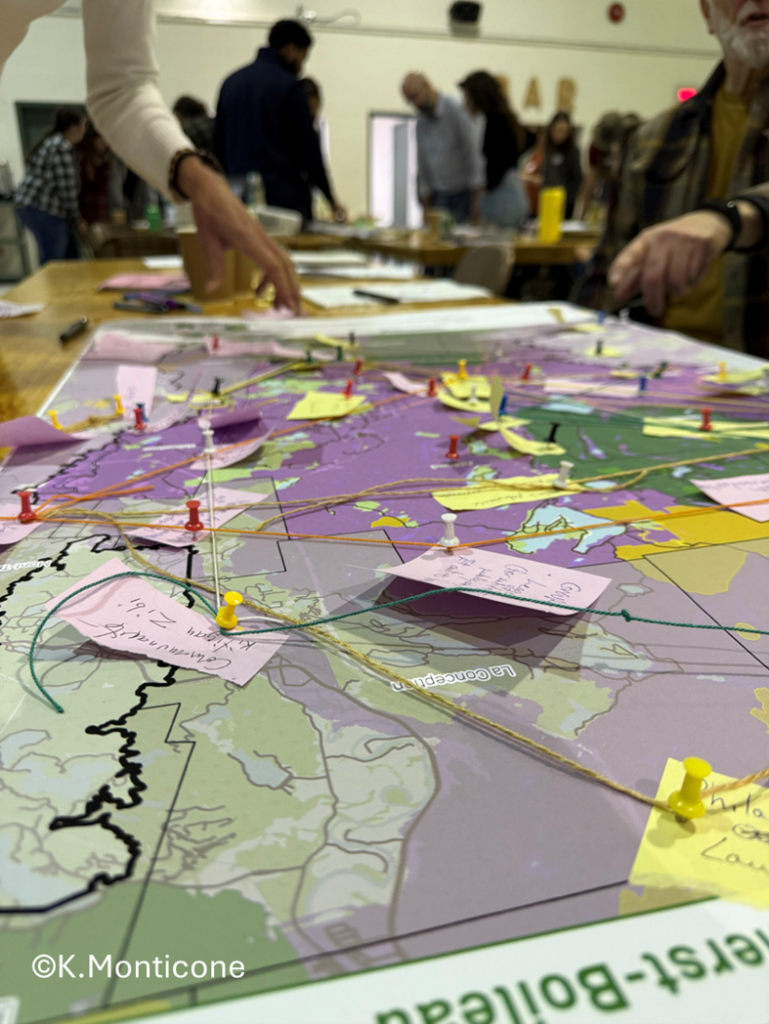
• Collaborative mapping of regional ecological networks in 11 regions
• More than 70 local municipalities and Regional County Municipalities integrating ecological corridors into their planning instruments
• Over 160 ecology-inclusive forest management plans approved, incorporating connectivity considerations
• More than 15,500 hectares of natural areas secured, contributing to functional ecological connectivity
• Broad public outreach through workshops, citizen-science tools, and communication materials, including 4 sector-specific toolkits
• A biennial symposium on ecological connectivity to share best practices and lessons learned
• 6 collaborative landscape-scale planning projects towards the creation of management and monitoring plans for key connectivity areas, based on the IUCN Guidelines for Conserving Connectivity through Ecological Networks and Corridors
The initiative has been recognised internationally as a case study advancing IUCN-compliant ecological corridor planning; it is also a member of the Staying Connected Initiative, which works to restore and enhance landscape connections across the Northern Appalachian/Acadian region that straddles northeastern USA and southeastern Canada.
Benefits for biodiversity and people
By strengthening habitat connectivity, the initiative improves ecosystem resilience (GBF Target 8), reduces wildlife mortality, and supports species adaptation to climate change. It also delivers benefits for people by fostering local collaboration (GBF Targets 20, 21), encouraging voluntary conservation and sustainable land-use practices, improving access to natural areas, and strengthening community resilience to climate impacts. The Québec Ecological Corridors Initiative shows the essential role of subnational and regional governments in delivering the Global Biodiversity Framework. By integrating conservation, climate adaptation, and land-use planning, the initiative shows how nature-based solutions can generate benefits for both biodiversity and communities.
As the global community prepares COP17, the experience in Québec highlights the importance of governance and financing mechanisms that recognise and support regional action to bridge the gap between global commitments and on-the-ground implementation.
GBF targets addressed: 1, 2, 3, 8, 12, 20, 21.
Focus area: Nature-based solutions; Ecological connectivity; Climate resilience
Read more:
• Québec’s 2030 Nature Plan and associated 2024-2028 Action Plan
• Québec Ecological Corridors Initiative
• Story map of the Québec Ecological Corridors Initiative
• Toolkits (in French only) made available by the Québec Ecological Corridors Initiative
• Documentary illustrating successful connectivity in Québec (in French with English subtitles available) – funded by the Government of Québec and other partners
• Québec’s Government Guidelines on Land-use and Planning (in French only), and launch video
#RegionsVoice brings the voice of regional governments to major events and negotiation processes on sustainable development within the UN. The campaign brings visibility and wider recognition of the role of regional governments in sustainable development, by elevating both individual and collective messages and engaging with a wider audience during the UN Decade of Action.
More actions in this region
- 5 million CAD invested annually

Direct Health Assistance
Québec, Canada The government of Quebec provides direct health assistance to its population- Climate Monitoring

Ecological Connectivity and Climate Transition in Quebec
Québec, Quebec Ecological Connectivity and Climate Transition in Quebec As North America’s climate
How the Government of Québec is supporting Indigenous leadership for biodiversity conservation
Québec, Canada The Government of Québec is supporting Indigenous-led initiatives as a foundational element
Multidisciplinary Hub of Expertise on the Sustainable Management of the Littoral Zone of Lake Saint-Pierre in Québec
Québec, Canada The United Nations General Assembly has declared the UN Decade on- A network of 450 researchers, experts, practitioners, and decision-makers

Planning and implementing Québec’s adaptation to future climate
Québec, Canada Relying on solid scientific knowledge to take into account the future- Climate Monitoring

Preparing for the future: How Québec’s Biodiversity Monitoring Network tackles environmental change
Québec, Canada Preparing for the future: How Québec’s Biodiversity Monitoring Network tackles environmental
Putting Communities at the Heart of Conservation in Québec
Québec, Quebec Québec's open call for conservation projects is centering people in decision-making,
Québec Becomes the First Region to Support Global Biodiversity Fund with Historic Investment in Nature
Québec, Canada At COP16, the Government of Québec became the first subnational government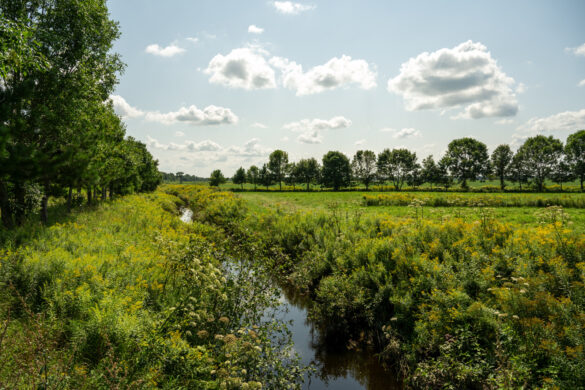
Québec Ecological Corridors: supporting resilience against climate change and biodiversity loss
Québec, Canada Through the Québec Ecological Corridors Initiative Québec province is using nature-based- 161,540 km2 of protected territory
Quebec’s network of protected areas
Québec, Canada The network of protected areas of land and freshwater covers 10.65%- 5560 observations of IAS published
Sentinelle
Québec, Canada Online tool for detecting invasive alien species Quebec is Canada’s largest- Climate Monitoring