Putting Communities at the Heart of Conservation in Québec
Québec, QuebecDelivering 30×30: Regions turning global biodiversity commitments into coordinated territorial action
Across Québec, biodiversity faces growing pressures from habitat loss, climate change, and increasing development. In response, the Government of Québec has committed to conserving 30% of its continental and marine environments by 2030. Reaching this goal- often referred to as “30×30” – a worldwide initiative for governments to designate 30% of Earth’s land and ocean land as protected areas by 2030 – requires broad participation, practical tools, and shared responsibility.
Inviting society to propose new protected areas
In spring 2024, Québec launched a public call for protected area proposals in southern Québec, a region rich in biodiversity but under increasing development pressure. Instead of identifying new protected areas internally, the Government of Québec invited organizations, communities, Indigenous nations, and citizens to propose territories for conservation.
The call remained open until October 2024 and was designed to ensure strong local support. Continental and marine proposals required endorsement from the relevant Regional County Municipality, while Indigenous-led projects required a resolution from the Band Council or governing body. Marine proposals were coordinated with federal authorities where needed.
Submitted projects will be discussed through Fall 2026 at regional dialogue tables, where local stakeholders work together to identify priority areas and build consensus before government decision-making. Indigenous nations and communities could also follow a distinct submission pathway, allowing additional time for consultation. Final decisions on new protected areas on public land in southern Québec are expected in 2027.
Expanding the criteria for biodiversity conservation in Québec
Achieving 30% of conservation cannot rely solely on traditional protected areas statuses such as parks and reserves. For this reason, Québec developed clear guidelines for recognizing Other Effective Conservation Measures (OECMs) – areas that may not be designated as protected but still deliver long-term biodiversity conservation.
These guidelines:
• Clarify eligibility criteria adapted to Québec’s legal and ecological context.
• Highlight the complementarity between OECMs and protected areas.
• Provide concrete examples of areas that may qualify.
To make participation accessible, Québec also developed practical tools:
• An online decision-support tool to assess potential OECMs.
• An interactive public map of protected areas and recognized OECMs.
• An official submission form.
• Support from Nature Québec, an NGO mandated to accompany proponents.
As of November 2025, 21 Other Effective Conservation Measures (OECMs) had been officially recognized, with more than 20 additional proposals under review.
Results and impact: Strong early participation
The response to the call for projects showed significant engagement across Québec, with more than 500 proposals submitted for protected areas in southern Québec.
Following preliminary analysis:
• More than 400 continental proposals will be discussed through Fall 2026, for recommendations toward a government decision. Of these, 35 proposals came from Indigenous nations, communities, or organizations.
• In marine areas, while 10 proposals were initially received, a gap analysis suggested four proposals should be added to strengthen ecological representativeness, thus leading to a total of 14 proposals.
These numbers reflect not only policy ambition, but strong societal willingness to contribute to conservation.
Monitoring progress towards the 30×30 target
Québec’s 2024–2028 Action Plan, which is the implementation tools for its 2030 Nature Plan Plan, identifies preliminary indicators aligned with the majority of the Kunming-Montreal Global Biodiversity Framework (GBF) targets.
A more comprehensive biodiversity indicator framework is currently being developed in consultation with ministries, academia, and Indigenous organizations and communities.
This upcoming framework aims, among other upgrades, to measure conservation expansion not only by area, but also by ecological representativeness, connectivity and effective long-term management.
Monitoring strengthens transparency and accountability as Québec advances toward its 2030 objective.
Why this matters for COP17
As preparations for COP17 move forward, implementation of the 30×30 target remains one of the clearest indicators of progress under the Kunming-Montréal Global Biodiversity Framework.
Québec’s experience shows that achieving 30% conservation requires:
• Inclusive governance and structured participation.
• Clear and accessible guidance.
• Practical tools that empower communities.
• Transparent dialogue mechanisms.
By combining public calls for proposals, Indigenous-specific pathways, regional dialogue tables, and guidance on Other Effective Conservation Measures (OECM), Québec shows how subnational governments can translate global biodiversity targets into operational, participatory frameworks.
Ultimately, Québec’s approach delivers a broader lesson for COP17: ambitious targets succeed when people are given the opportunity and the tools to help achieve them.
Kunming-Montreal Global Biodiversity Framework targets addressed: 3, 21, 22, 23.
Focus areas: 30×30 conservation; Participatory governance; Protected areas; OECMs; Knowledge and decision-support tools; Multilevel collaboration.
#RegionsVoice brings the voice of regional governments to major events and negotiation processes on sustainable development within the UN. The campaign brings visibility and wider recognition of the role of regional governments in sustainable development, by elevating both individual and collective messages and engaging with a wider audience during the UN Decade of Action.
More actions in this region
- 5 million CAD invested annually

Direct Health Assistance
Québec, Canada The government of Quebec provides direct health assistance to its population- Climate Monitoring

Ecological Connectivity and Climate Transition in Quebec
Québec, Quebec Ecological Connectivity and Climate Transition in Quebec As North America’s climate
How the Government of Québec is supporting Indigenous leadership for biodiversity conservation
Québec, Canada The Government of Québec is supporting Indigenous-led initiatives as a foundational element
Multidisciplinary Hub of Expertise on the Sustainable Management of the Littoral Zone of Lake Saint-Pierre in Québec
Québec, Canada The United Nations General Assembly has declared the UN Decade on- A network of 450 researchers, experts, practitioners, and decision-makers
Planning and implementing Québec’s adaptation to future climate
Québec, Canada Relying on solid scientific knowledge to take into account the future- Climate Monitoring

Preparing for the future: How Québec’s Biodiversity Monitoring Network tackles environmental change
Québec, Canada Preparing for the future: How Québec’s Biodiversity Monitoring Network tackles environmental
Putting Communities at the Heart of Conservation in Québec
Québec, Quebec Québec's open call for conservation projects is centering people in decision-making,
Québec Becomes the First Region to Support Global Biodiversity Fund with Historic Investment in Nature
Québec, Canada At COP16, the Government of Québec became the first subnational government
Québec Ecological Corridors: supporting resilience against climate change and biodiversity loss
Québec, Canada Through the Québec Ecological Corridors Initiative Québec province is using nature-based- 161,540 km2 of protected territory
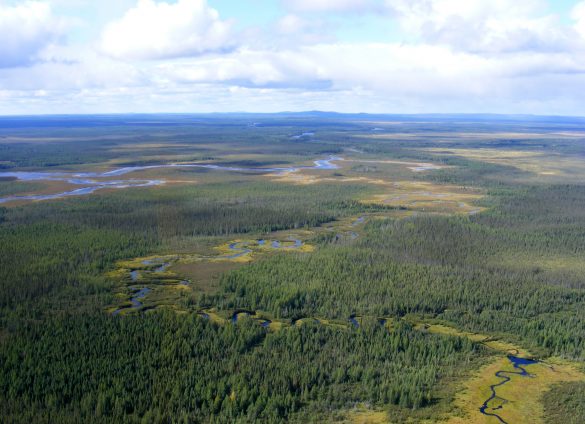
Quebec’s network of protected areas
Québec, Canada The network of protected areas of land and freshwater covers 10.65%- 5560 observations of IAS published
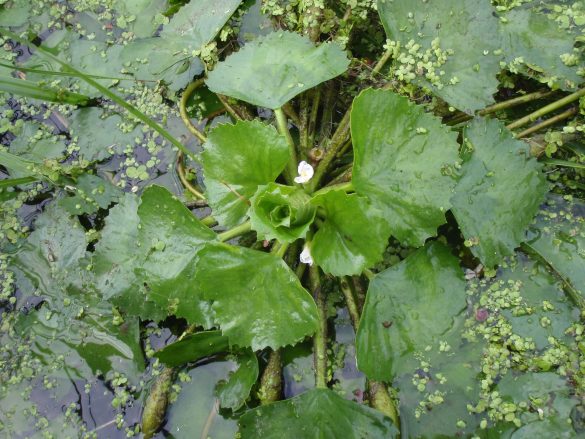
Sentinelle
Québec, Canada Online tool for detecting invasive alien species Quebec is Canada’s largest- Climate Monitoring