Collaborating Across Municipalities to Preserve Rio de Janeiro’s Biodiversity and Protected Areas
Rio de Janeiro, BrazilAs biodiversity loss accelerates and urban pressures expand, strengthening conservation efforts across all levels of government has become essential. Protecting biodiversity in a state as ecologically diverse as Rio de Janeiro requires coordinated action across all territories. In response to this challenge, the State of Rio de Janeiro launched the Support Program for Municipal Protected Areas (ProUC), to strengthen cooperation with its 92 municipalities and expand local conservation efforts.
Through the Support Program for Municipal Protected Areas (ProUC), the State of Rio de Janeiro is working alongside its 92 municipalities to expand and improve protected areas, safeguard the Atlantic Forest, and enhance ecosystem services. By combining state-level coordination with local implementation, the program translates global biodiversity commitments into practical action on the ground.
Created in 2009, ProUC has become a cornerstone of Rio de Janeiro’s biodiversity policy, aligning municipal conservation initiatives with the Kunming-Montreal Global Biodiversity Framework (GBF) and Brazil’s National Biodiversity Strategy.
Decentralizing conservation across municipalities
Given the extension and diversity of Rio de Janeiro’s ecological landscape, the State plays a strategic role in setting standards, aligning policies, and ensuring that conservation efforts are coherent and effective across its 92 municipalities. The engagement of municipal governments in land-use planning, protected area creation, and ecosystem management is essential to achieving lasting results.
Recognizing this, ProUC was designed to strengthen municipal capacity and expand conservation coverage across the state. Its objective is not only to increase the total area under protection but also to improve the quality, governance, and long-term effectiveness of these areas.
The program supports municipalities in safeguarding the Atlantic Forest, one of the world’s most threatened biodiversity hotspots, while enhancing ecosystem services that benefit communities and urban populations alike.
The initiative and its fiscal incentive
ProUC provides continuous technical assistance to Municipal Environment Secretariats for the creation and consolidation of protected areas.
Its core actions include:
- Supporting the legal creation of new municipal protected areas
- Training public managers and technical staff.
- Assisting in the development of Municipal Atlantic Forest Conservation and Restoration Plans.
- Strengthening management through infrastructure support, including monitoring equipment and vehicles.
- Supporting the preparation and approval of Management Plans.
A key element of the program is the integration of conservation performance with fiscal incentives. By ensuring that protected areas are legally sound and properly registered in the National Register of Protected Areas (CNUC), municipalities become eligible to receive revenues from the Ecological ICMS, a tax redistribution mechanism linked to environmental performance.
This alignment between policy guidance and financial incentives encourages municipalities to invest in biodiversity conservation while reinforcing long-term management capacity.
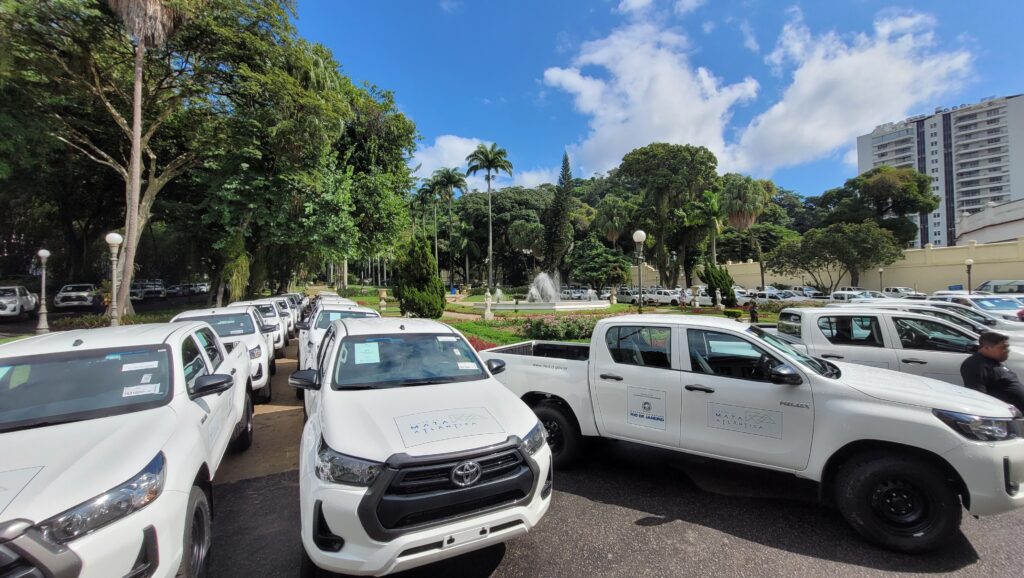
Photo©: State of Rio de Janeiro
From policy to practice
For over 15 years, ProUC has evolved into a comprehensive support system for local environmental governance.
Monitoring is carried out through continuous follow-up of municipal protected area creation and management processes. Key indicators include:
- Number of participating municipalities
- Total hectares of protected areas created with program support
- Number of completed Management Plans
Data is consolidated into public transparency tools such as the Atlas of Municipal Protected Areas and the Municipal Protected Areas Observatory, strengthening information access and evidence-based decision-making.
The donation of camera traps and technical training has enhanced biodiversity monitoring and contributed to updating the State’s List of Wild Fauna, linking local data collection to state-wide conservation planning.
Results across the State of Rio de Janeiro
Since 2009, the initiative has delivered significant territorial and institutional impact:
- More than 60 municipal protected areas were created.
- Approximately 120,000 hectares are placed under protection.
- Over 400 designation acts and land tenure documents reviewed and regularized.
- Dozens of municipalities enabled to access Ecological ICMS revenues.
- Hundreds of public managers trained in biodiversity monitoring and management.
- Donation of vehicles and equipment to strengthen wildfire response, inspection, and monitoring capacity.
- Launch of the country’s first Atlas of Municipal Protected Areas and an online Observatory.
These achievements contribute directly to ecosystem restoration, species protection, expansion of conserved areas, and enhanced green spaces that support human well-being.
By strengthening municipal protected areas, ProUC safeguards biodiversity while improving quality of life for citizens.
Protected areas provide climate regulation, water security, recreation opportunities, and resilience against natural hazards. Improved monitoring and management enhance conservation outcomes while generating reliable data to guide future action.
When higher levels of government provide strategic direction, technical expertise, and financial incentives, local authorities are better positioned to consolidate protected areas, strengthen management, and achieve more durable biodiversity outcomes.
Why this matters for COP17
Delivering the Global Biodiversity Framework requires coordinated action across levels of government. While global targets set up the ambition, implementation depends on territorial planning, institutional capacity, and sustained local engagement.
The ProUC initiative shows how a state government can enable municipalities to expand protected areas, strengthen governance, and align fiscal mechanisms with biodiversity goals.
As the global community prepares for COP17, this experience highlights the importance of reinforcing cooperation across governance levels to ensure that global commitments translate into measurable conservation outcomes on the ground.
GBF targets addressed: 1, 2, 3, 4, 11, 12, 20, 21.
Focus area: Protected areas; Multilevel governance; Biodiversity incentives; Nature-based solutions.
Read More:
https://prouc.ambiente.rj.gov.br/
#RegionsVoice brings the voice of regional governments to major events and negotiation processes on sustainable development within the UN. The campaign brings visibility and wider recognition of the role of regional governments in sustainable development, by elevating both individual and collective messages and engaging with a wider audience during the UN Decade of Action.
More actions in this region

‘Olho no Verde’: Protecting the Atlantic Forest with satellite technology
Rio de Janeiro, Brazil The state of Rio de Janeiro is combating illegal deforestation across- Increasing sanitation from 45% to 90%

Blue Metropolis Vision: Navigating Water Challenges for a Resilient and Sustainable Future in Rio de Janeiro
Rio de Janeiro, Brazil In the next decade, Rio de Janeiro is embarking on a
Collaborating Across Municipalities to Preserve Rio de Janeiro’s Biodiversity and Protected Areas
Rio de Janeiro, Brazil The State of Rio de Janeiro is working with 92 municipalities
Conexão Mata Atlântica in Rio de Janeiro: conservation and restoration aligned with sustainable production
Rio de Janeiro, Brazil Rio de Janeiro, Brazil The Conexão Mata Atlântica project is an
Forests of Tomorrow: Restoring the Atlantic Forest in Rio de Janeiro
Rio de Janeiro, Brazil Rio de Janeiro’s Forests of Tomorrow Program restores the Atlantic Forest
Multilevel climate leadership: How Rio de Janeiro Advances Brazil’s Climate Federalism
Rio de Janeiro, Brazil In November 2024, Brazil submitted its enhanced Nationally Determined Contribution (NDC)
Regions4 General Assembly 2024
Raising the bar for climate resilience through regional action.- Partnerships for a Sustainable Future

Rio de Janeiro and UN-Habitat Join Forces
Rio de Janeiro, Brazil Partnerships for a Sustainable Future: The Government of Rio de Janeiro
Rio de Janeiro’s water security strategies for climate action
Rio de Janeiro, Brazil Recognizing the water vulnerability and the importance of treating water security