BioClima: Mobilizing Public and Private Finance for Biodiversity in Lombardy
Lombardy, ItalyFacing rising biodiversity pressures and constrained public budgets, in 2022 the Lombardy Region has launched BioClima, a blended finance mechanism that mobilizes private capital for nature-based solutions across its territory. With the public-financing phase completed in 2025, BioClima has already delivered tangible and measurable results while private financing efforts continue.
As biodiversity loss accelerates and public budgets face increasing pressure, new financial models are needed to scale action for nature. Through BioClima, Lombardy Region pioneered an innovative public–private finance mechanism that brings together public and private capital to support biodiversity conservation, climate adaptation, and ecosystem services. By combining regional grants with private co-financing, the initiative shows how nature-based solutions can attract investment while delivering measurable environmental results. Led by Lombardy Region in partnership with ERSAF, Fondazione Cariplo, and Etifor, BioClima shows how subnational governments can help close the biodiversity finance gap and translate global commitments under the Kunming-Montreal Global Biodiversity Framework (GBF) into concrete territorial action.
Photos©: Government of Lombardy
A financing gap for nature
Restoring ecosystems, improving forest resilience, and enhancing ecosystem services require sustained financial resources. Yet public funding alone is insufficient to meet the scale of investment required to halt biodiversity loss and restore degraded ecosystems.
Recognizing this challenge, Lombardy developed BioClima as a blended-finance model designed to attract private-sector participation in biodiversity conservation.
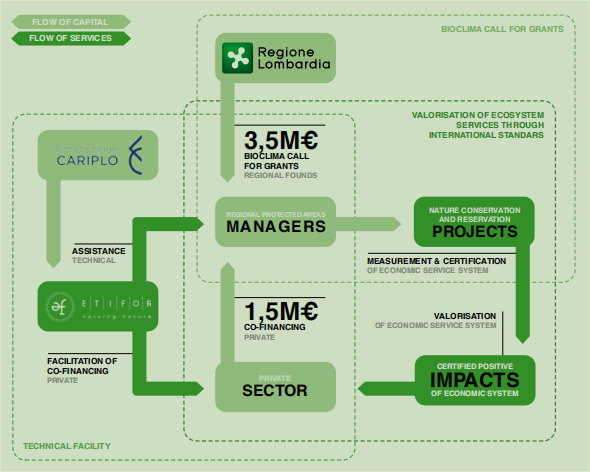
The mechanism operates at two complementary levels:
• Local level: Project beneficiaries generate certified positive ecosystem impacts, enabling them to secure sponsorships and co-financing from local private companies
• Regional level: The Region provided non-repayable grants covering up to 70% of project costs, with the public-financing phase concluding in December 2025, leveraging additional private contributions that continue to be mobilized
Projects must include at least 30% co-financing, with a minimum of 10% from private sources.
The BioClima initiative
Photo©: Government of Lombardy
Launched in February 2022, with the public-financing phase completed in December 2025, BioClima has already delivered tangible and measurable results while private financing efforts continue.
Each funded project must integrate three components:
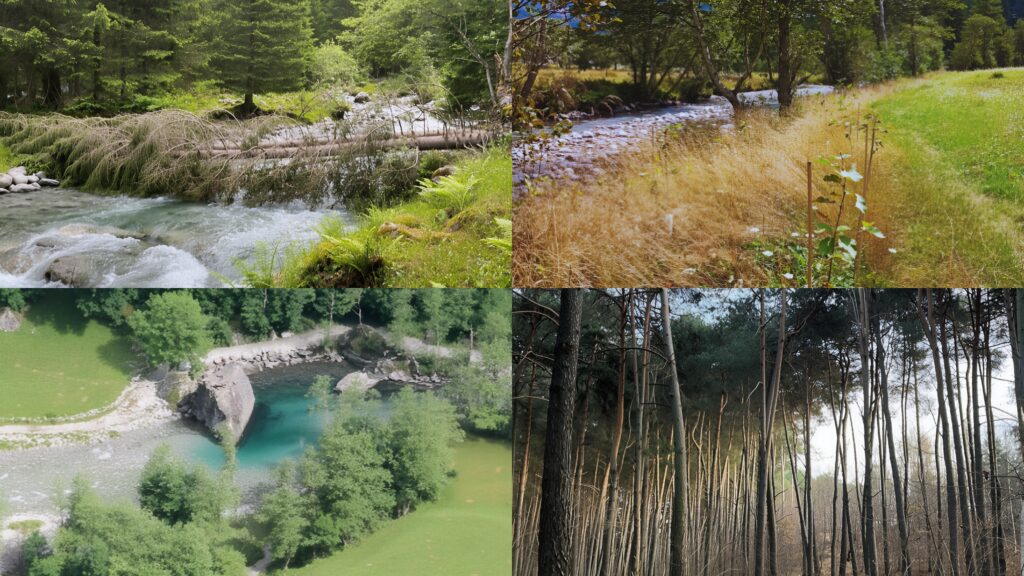
• Primary forest-related interventions
• Supplementary biodiversity protection measures
• Enhancement of ecosystem services
The initiative was made possible with €3.5 million in regional funding and more than €2 million in private co-financing. Technical assistance from Etifor supports the mobilization of private capital, certification processes, and dissemination activities.
Through this model, Lombardy contributes directly to ecosystem restoration, pollution reduction and sustainable management, enhancement of nature’s contributions to people, and the mobilization of biodiversity finance. This promotes shared responsibility, strengthens financial sustainability, and increases local ownership of biodiversity outcomes.
Projects are subject to technical and financial monitoring throughout implementation. The final funding balance is released only after verification of completed interventions, while long-term monitoring is carried out by park and protected area authorities. This helps ensure accountability and that investments result in measurable ecological improvements.
From design to implementation
BioClima combines environmental ambition with financial innovation.
Key actions include:
• Designing a rolling-call financing mechanism to attract biodiversity projects
• Certification of positive ecosystem service impacts
• Mobilization of private sponsorships linked to verified outcomes
• Ongoing technical and financial monitoring before fund disbursement
With the public-financing phase concluded, the focus now shifts to ongoing private capital mobilization, demonstrating the initiative’s long-term sustainability and collaborative nature.
Photos©: Government of Lombardy
Results achieved across Lombardy
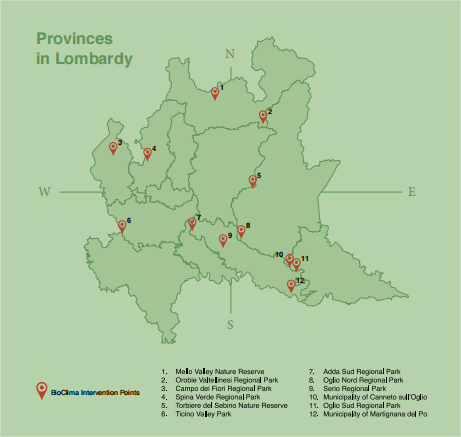
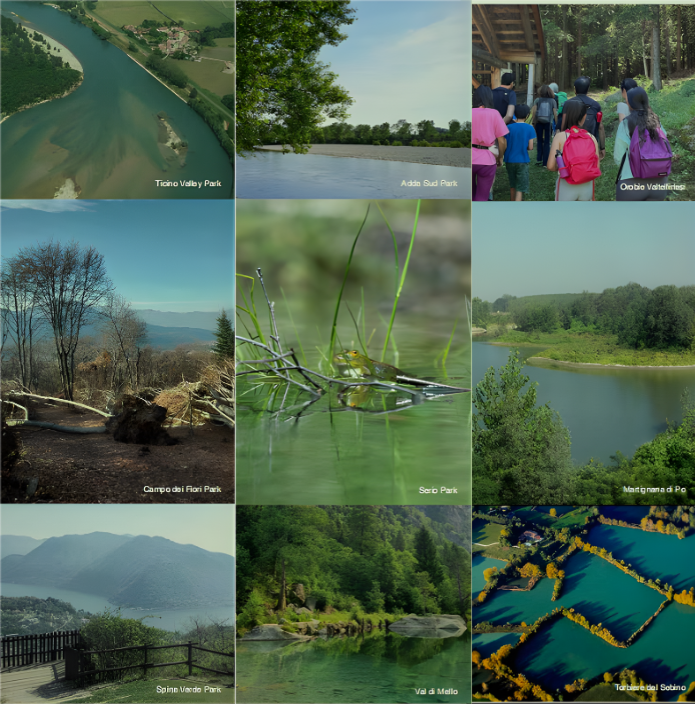
Out of 18 submitted proposals, 12 projects were approved and launched, generating significant territorial impact:
• Over 3,000 hectares certified for responsible forest management with verified positive ecosystem service impacts
• More than 300 hectares of forest improvement interventions
• Over 27 hectares of targeted biodiversity conservation measures
• Conservation interventions benefiting 16 protected habitats and over 20 protected species
• €5.6 million mobilized in total financing
• Over 150 participants trained in responsible forest management and ecosystem service certification
• More than 20 outreach events and over 100 media mentions
These results reflect achievements under the completed public-financing phase, while additional impacts are expected as ongoing private financing continues to support further biodiversity action.
The initiative is estimated to have generated an economic impact exceeding €5 million while delivering region-wide environmental benefits.
Photos©: Government of Lombardy
From design to implementation
BioClima shows that biodiversity conservation can be financially viable and economically attractive when supported by the right governance framework.
By restoring forests and enhancing ecosystem services, the initiative strengthens carbon sequestration, improves soil and water regulation, and increases resilience to climate impacts. It also supports sustainable land management practices and reduces environmental pressures.
At the same time, the blended-finance model fosters collaboration between public authorities, private companies, park managers, and local communities. It builds technical capacity, spreads awareness, and creates new opportunities for responsible investment in nature.
Overall, Lombardy demonstrates how financial innovation can unlock systemic change.
Photo©: Government of Lombardy
Why this matters for COP17
Closing the biodiversity finance gap is one of the most urgent priorities under the Global Biodiversity Framework. Subnational governments manage forests, protected areas, and ecological networks, yet they often lack direct access to international biodiversity finance.
BioClima provides a scalable model for mobilizing public and private resources at a territorial scale.
The completed public-financing phase highlights clear, measurable outcomes, while the ongoing private-financing component shows the potential for continuous impact. Lombardy’s experience demonstrates how regions can act as financial innovators, delivering tangible results while sustaining long-term investment in biodiversity.
Strengthening and replicating such models will be essential to bridge the gap between global ambition and on-the-ground delivery.
GBF targets addressed: 2, 6, 7, 11, 19.
Focus area: Biodiversity finance; Blended finance; Forest restoration; Nature-based solutions.
#RegionsVoice brings the voice of regional governments to major events and negotiation processes on sustainable development within the UN. The campaign brings visibility and wider recognition of the role of regional governments in sustainable development, by elevating both individual and collective messages and engaging with a wider audience during the UN Decade of Action.
More actions in this region
BioClima: Mobilizing Public and Private Finance for Biodiversity in Lombardy
Lombardy, Italy Lombardy Region’s BioClima model combines public funding and private investment to
Energy, Environment, and Climate Regional Program in Lombardy
Lombardy, Italy With the resolution of 2 August 2022, the Regional Council approved
How Lombardy Is Helping Small Businesses Drive Sustainable finance
Lombardy, Italy The road to sustainability isn’t always easy to understand, especially for- Removed from 3000Ha of forest

Life EC SQUARE
Lombardy, Italy Eradication and control of the grey squirrel: actions for preservation of
Lombardy Adopts Italy’s First Regional Climate Law
Lombardy, Italy Lombardy has adopted Italy’s first regional climate law, marking a decisive
Lombardy’s Experimental Feeding Station: A Nature-Based Solution for Scavenger Birds
Lombardy, Italy The Lombardy Region launched an experimental feeding station to protect vulnerable scavenger birds- Safeguarding biodiversity and agriculture
Lombardy’s Gestire 2020 Project
Lombardy, Italy Raising farms productivity and sustainability while protecting habitat and species Lombardy
Lombardy’s PREAC : Aligning Regional Sustainability to Global Goals and Initiative
Lombardy, Italy In the face of global challenges, Lombardy, Italy, has embarked on- 21 indicators on SDGs implementation
Planning the SDGs localization in Lombardy
Lombardy, Italy A multi-level and multi-stakeholder approach Lombardy is one of the twenty