Napo strengthens the Kichwa Amazonian Chakra and promotes Indigenous-Led Resilience
Napo, EcuadorIn Ecuador’s Napo Province, Indigenous Kichwa communities and the provincial government are working together to protect one of the Amazon’s oldest agroforestry systems: the Kichwa Amazonian Chakra. Recognized through provincial legislation since 2017, the initiative combines ancestral knowledge, participatory governance and community-based certification to conserve biodiversity, strengthen local livelihoods and support climate resilience.
In Ecuador’s Napo Province, the Kichwa Amazonian Chakra offers a different approach. More than an agricultural system, managed by Indigenous families, the Chakra is a traditional agroforestry system that integrates crops, medicinal plants and forest species within the same landscape, reproducing the ecological structure of the Amazon rainforest. Beyond food production, it serves as a mechanism for biodiversity conservation, sustainable livelihoods, and intergenerational knowledge transmission. Through public policies, multi-stakeholder governance, and community-led certification systems, the provincial government of Napo is supporting Indigenous-led solutions to environmental challenges such as deforestation, land degradation and economic marginalization, showing how subnational governments can advance climate resilience and biodiversity conservation while strengthening Indigenous rights and equity.
Ancestral knowledge as a foundation for resilience
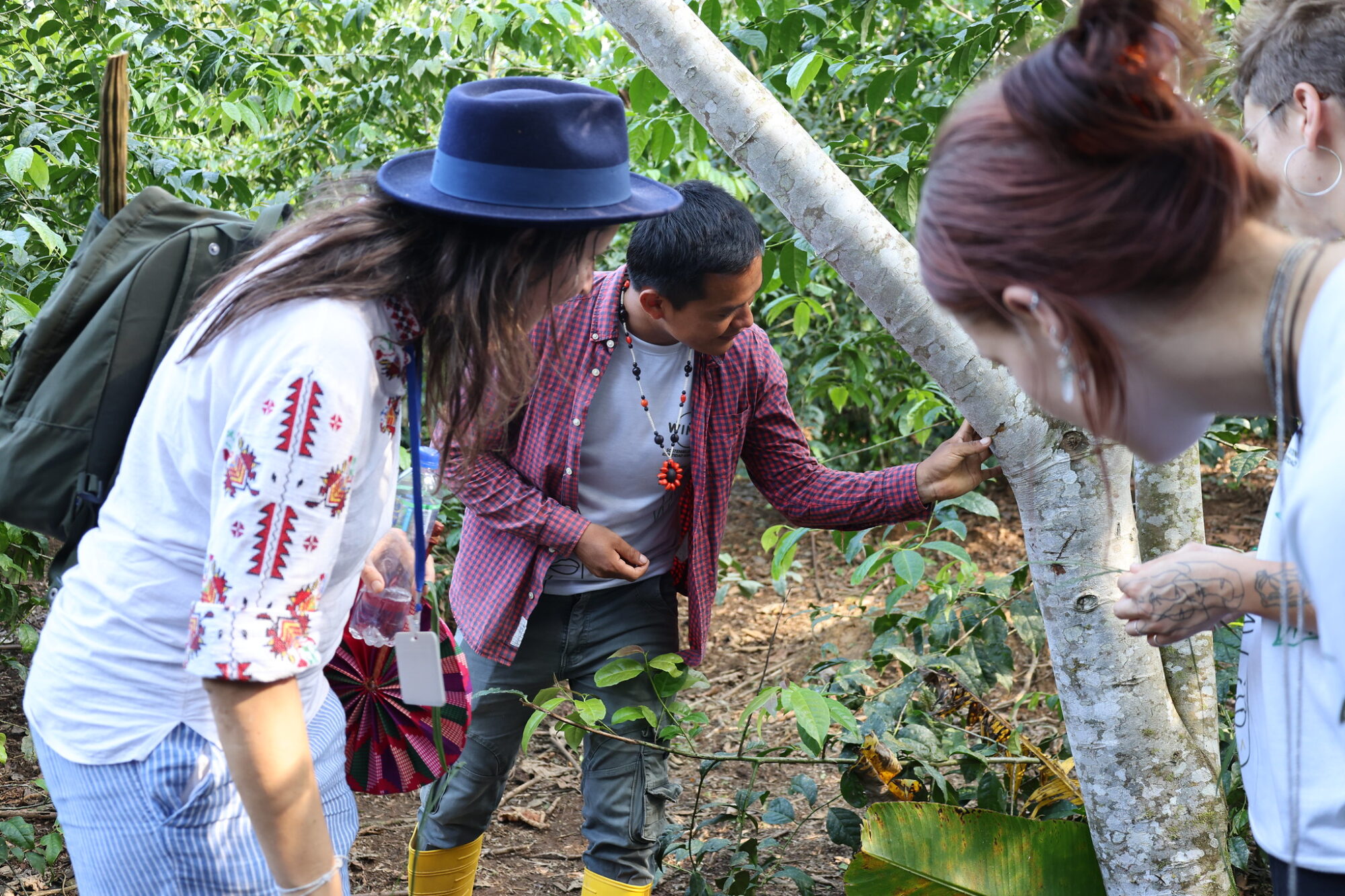
The Kichwa Amazonian Chakra is ancestral agroforestry system practiced by Indigenous communities across the Ecuadorian Amazon. Designed to mimic the structure of the Amazon rainforest, it combines multiple vegetation layers that help protecting soils, conserve biodiversity, and contribute to carbon sequestration. Rather than separating conservation from production, the system combines food cultivation, medicinal plants, forest species, and cultural practices within the same territory, allowing families to sustain their livelihoods while maintaining ecological balance.
At the center of the Chakra system are the chakramamas, Indigenous women responsible for managing the land and transmitting ancestral knowledge between generations. Through cultivation practices, seed selection, oral teachings, and spiritual traditions, they ensure the continuity of both biodiversity and cultural identity. The Chakra also contributes directly to climate resilience. Agroforestry systems within the territory act as significant carbon sinks while strengthening ecosystem functionality and reducing vulnerability to environmental degradation.
From ancestral practice to public policy
Recognizing the growing pressures facing Indigenous territories, including deforestation, illegal mining, and economic displacement, the Provincial Government of Napo formally recognized the Kichwa Amazonian Chakra through a provincial ordinance (local law) adopted in 2017.The ordinance established a public policy framework aimed at:
Key initiatives include:
• Conserving the Chakra agroecosystem
• Strengthening Indigenous cultural identity
• Promoting participatory governance
• Supporting sustainable livelihoods
• Encouraging investment in conservation and community resilience
Rather than imposing external conservation models, the framework was developed in response to demands from Indigenous organizations and Chakra producers themselves.
The regulation also formally defines the Chakra as a biodiverse and family-managed production system based on ancestral Kichwa practices and designed to avoid monoculture production.
Building participatory governance around Indigenous leadership
To support implementation, Napo created the Chakra Group, a multi-stakeholder governance platform bringing together Indigenous organizations, provincial and municipal governments, ministries, universities, NGOs, and international cooperation partners.
The platform coordinates technical support, territorial planning, monitoring, and knowledge exchange through participatory decision-making structures. This governance model allows Indigenous communities to play a central role in shaping policies affecting their territories while strengthening collaboration across institutions.
The Chakra Group also works to increase resilience through:
• Technical assistance for sustainable agroforestry
• Capacity-building and training
• Support for market access
• Conservation planning and ecosystem restoration
• Climate adaptation strategies rooted in local knowledge
By linking Indigenous governance with public institutions and international cooperation, the initiative creates a shared framework for long-term resilience.
Creating economic opportunities through community certification
To strengthen the economic viability of the Chakra, local organizations developed the Participatory Guarantee System (SPG) and the Chakra Seal. Unlike conventional certification schemes, which can be costly and inaccessible for small producers, the SPG is a community-based certification system built on community participation, trust and shared accountability. It certifies producers who follow the ecological and cultural principles of the Chakra while promoting agroecological production and fair commercialization. The certification operates through political, technical, and operational bodies, supervised by an Ethics Committee responsible for accreditation and certification processes. This approach helps Indigenous producers access differentiated markets while preserving the cultural and environmental integrity of the Chakra system.
Led by local producer organizations, the Kichwa Amazonian Chakra has received international recognition, being recognized by the FAO as a Globally Important Agricultural Heritage System (GIAHS), strengthening its visibility and long-term protection.
Equity and Indigenous leadership in practice
The Chakra initiative demonstrates how climate resilience and biodiversity action can advance equity when Indigenous communities lead governance processes.
Kichwa communities represent more than half of Napo’s population and have historically faced high levels of poverty and exclusion. The initiative seeks to address these challenges by strengthening local governance, supporting sustainable livelihoods and creating fairer market opportunities. Women play a particularly central role. The chakramamas are not only knowledge holders but leaders in biodiversity management, seed conservation, food security, and cultural transmission.
The governance structure also ensures broad participation across generations and institutions. The Corporación de Asociaciones de la Chakra Amazónica, representing around 2,400 Kichwa families, including women and youth, plays a leading role in coordinating the Chakra Seal and participatory governance mechanisms.
At the same time, the initiative seeks to improve economic justice by creating fairer market opportunities for Indigenous producers through agroforestry products such as cacao and guayusa.
Why this matters for COP17
The Kunming-Montréal Global Biodiversity Framework recognizes and emphasizes the importance of Indigenous Peoples and local communities in biodiversity conservation, ecosystem restoration, and equitable governance. Napo’s experience shows how these commitments can be translated into territorial action. Rather than treating Indigenous knowledge as complementary to policy, the Chakra initiative places Indigenous governance, participation, and cultural values at the center of resilience strategies.
By combining biodiversity conservation, climate adaptation, participatory governance, and equitable economic opportunities, the initiative demonstrates how subnational governments can support just resilience while strengthening both ecosystems and communities.
As countries and regions prepare for COP17, Napo offers an important lesson: resilient territories are built not only through environmental protection, but through the recognition and empowerment of the communities that have protected these ecosystems for generations.
GBF targets addressed: 1, 2, 11, 13, 20, 21, 22, 23.
Focus area: Indigenous leadership; Just resilience; Agroforestry; Participatory governance; Nature-based solutions; Gender equity.
Read more:
• Cultivating Just Resilience: The Chakra Group as a community mechanism for sustainable conservation in Napo
#RegionsVoice brings the voice of regional governments to major events and negotiation processes on sustainable development within the UN. The campaign brings visibility and wider recognition of the role of regional governments in sustainable development, by elevating both individual and collective messages and engaging with a wider audience during the UN Decade of Action.
More actions in this region