Regions at COP31: turning food waste from a methane problem into an economic opportunity
At COP31 in Antalya, Regions4 and the High Level Climate Champions team brought together regional governments from Europe, Latin America and Africa to share how they are keeping food and organic waste out of landfills, and what they need to go further.
Introduction
Food waste is a universal challenge, both in the Global North and South. When food rots in landfills it releases methane, a gas around 80 times more potent than CO₂ over its initial 20 years in the atmosphere, and food makes up almost 40% of the world’s municipal waste. Cutting food waste one of the most effective ways to ease the pressure on both subnational and local waste services and reduce the impacts of climate change.
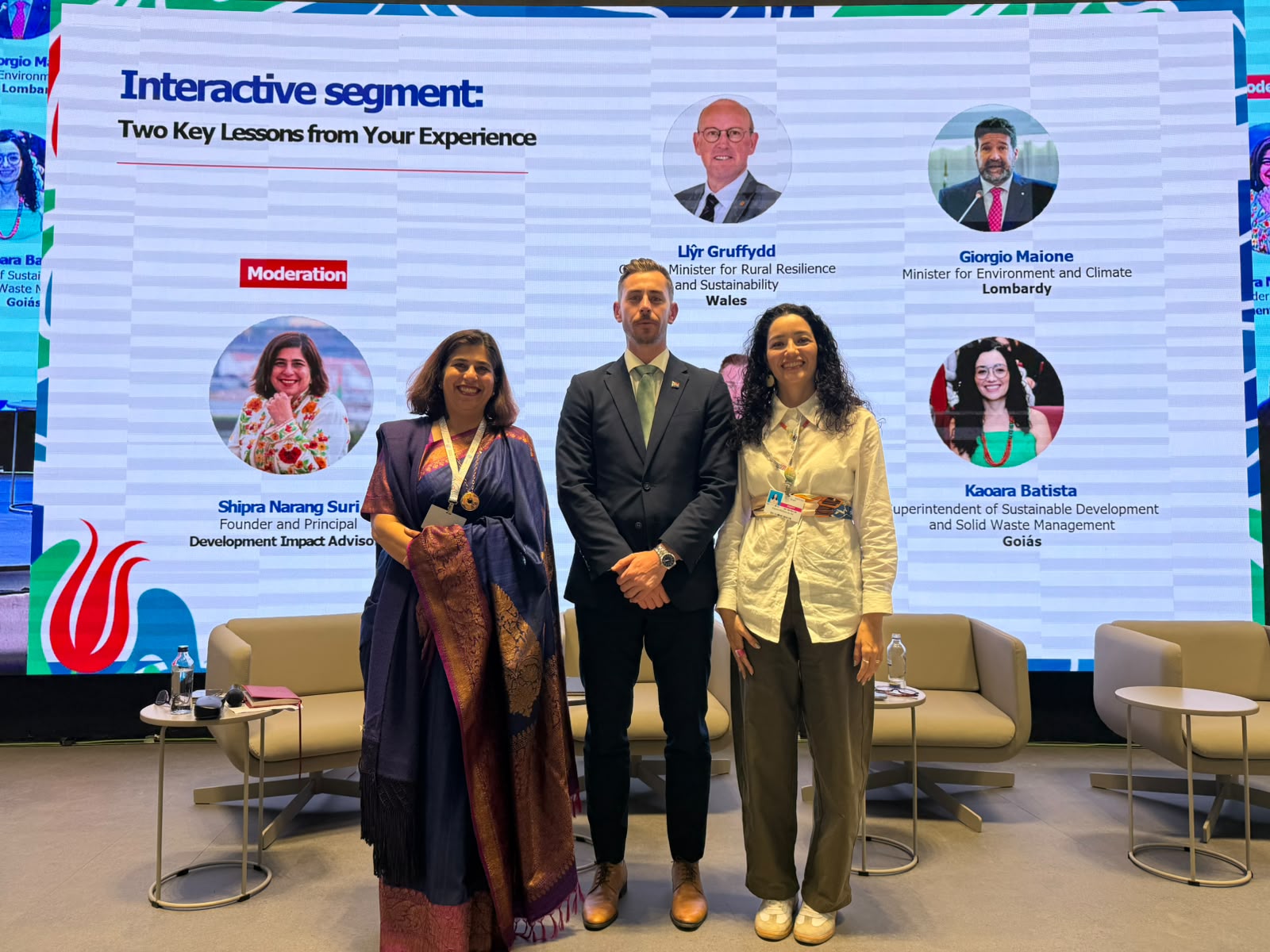
On 11 November 2026, the session “Regional Governments Leading on Food Waste and Methane” took place on the Our Common Home Stage at the Zero Waste Museum, in the COP31 Blue Zone. It was moderated by Dr Shipra Narang Suri, Founder and Principal of Development Impact Advisors.
The session builds on the COP31 Presidency’s decision to make zero waste a priority of the Global Climate Action Agenda, with goals to halve the growth in global waste by 2035 and to source at least 15% of materials from recycled or recovered sources, alongside the new Zero Waste Districts Initiative. As Dr Narang Suri reminded the audience, global goals cannot be achieved without local action, and states and regions run or oversee much of what it takes: waste collection, landfills, local industry and business support.
Three regions shared what worked, what it took and what would help others follow.
Wales (United Kingdom): making food waste separation the default
Llŷr Gruffydd MS, Cabinet Minister for Rural Resilience and Sustainability, described food waste as an environmental, economic and social priority for Wales. Thirty years ago, around 97% of the country’s municipal waste went to landfill. Today, Wales ranks second in the world for recycling, at around 70%, with less than 1% landfilled, and methane emissions have fallen by 72% over the same period.
The work is far from over. Around three quarters of household food waste in Wales could have been eaten. The Love Food Hate Waste campaign helps households plan meals and store food better, while a partnership with FareShare redirected surplus food from businesses to community organisations, equal to almost 3 million meals last year. Around 56% of household food waste is now collected separately for anaerobic digestion, and since the rules were extended to workplaces, food waste collected from businesses has risen by 55%. Wales is also developing a national food strategy with retailers and manufacturers, guided by its Well-being of Future Generations Act.
Asked for his advice to other regions, the Minister urged them to be in it for the long term, as the transition took Wales two decades. Consistent policy and investment give local government certainty, services must be designed around people, and clear national guidance pays off: councils that follow the Welsh collections blueprint deliver the highest recycling rates.
“Meaningful change is possible when long-term ambition is matched by practical action, investment and, importantly, public participation.” Llŷr Gruffydd MS, Wales (United Kingdom)
Goiás (Brazil): from open dumps to regional waste services
Kaoara Batista, Superintendent of Sustainable Development and Solid Waste Management, explained that the state’s most urgent task has been closing open dumpsites before tackling organic waste. When Goiás launched its Zero Dumpsite programme (Lixão Zero) in 2023, only 17% of municipalities disposed of their waste properly. By taking a leading role, providing technical support and setting clear rules, the state has raised this to 58% of municipalities, covering around 80% of the municipal solid waste generated in Goiás.
The next step is regionalisation. Many of the state’s 246 municipalities, some with fewer than 1,000 inhabitants, cannot build even a basic landfill alone. Grouping them into shared regional services brings economies of scale, private investment and long-term financial sustainability, and creates a path to bring waste pickers still working on dumpsites into formal, safer jobs.
Ms. Batista was candid about the obstacles: waste is rarely a priority for mayors, most residents pay no specific fee for the service, and policy is often restarted from zero after each four-year election cycle. From national governments, she called for stable regulatory frameworks, clear institutional responsibilities and long-term funding, noting that Brazil still has over 3,000 dumpsites.
“Waste management is not just about infrastructure. It’s about people, public health, environment and the future of our communities.” Kaoara Batista, Goiás (Brazil)
Gauteng (South Africa): from food waste to compost through industrial symbiosis
Ewan Botha, Member of the Executive Council for Environment and Regions4 Vice President for Africa, set out the stakes for South Africa’s economic heartland. Gauteng is home to around 16.4 million people and generates about a third of the country’s GDP, yet most waste is not separated at source and ends up in landfills, where methane builds up and can cause fires and explosions.
Since 2015, the province has run the Gauteng Industrial Symbiosis Programme with the National Cleaner Production Centre of South Africa, connecting companies so that one firm’s waste becomes another’s resource. The programme has facilitated 8 synergies turning food waste into compost across 16 facilities, and has contributed to cutting over 1.5 million tonnes of greenhouse gas emissions. Over the past five years, the province has recorded more than 520,000 tonnes of food waste treated or composted.
His key lesson: people act when they see an economic opportunity. Gauteng will launch a youth roadshow in high-inequality areas most affected by illegal dumping, helping young people register companies, obtain waste licences, receive training and equipment through producer responsibility organisations, and connect with buyers for the waste they collect. He also called on national and local governments to move faster on separation at source, saying the current system needs to be reinvented.
“Peer-to-peer learning is not a nice to have. It’s a necessity. Otherwise, you’re just reinventing the wheel.” Ewan Botha, Gauteng (South Africa)
Voices from the room
The audience brought perspectives from Nigeria and Bangladesh. One participant setting up an End Food Waste initiative in Nigeria, focused on composting and renewable energy, pointed to the lack of infrastructure and regulation as the main barrier. Another, from Bangladesh, called for international guidance on separating food waste and for business models that give people a stake in reducing it. Responding as Regions4 Vice President for Africa, Ewan Botha offered to work together on policy frameworks and financing, and stressed that Africa’s regions need to speak for their own specific needs to unlock finance.
Four takeaways
Closing the session, Dr Shipra Narang Suri drew out four lessons for regions and their partners:
- No level of government can do it alone. National governments set the policy, regulation and budgets; local governments are closest to people; regions connect the two. This requires vertical and horizontal coordination, and peer-to-peer learning across borders.
- Waste is an economic question, not only an environmental and social one. Turning waste management into business opportunities, including by helping waste pickers become registered small businesses, is key to lasting change.
- This is a long-term effort. It will not be solved within one electoral cycle, so political leaders need long-term strategies and the will to stay the course.
- Clarify who is responsible for what. Separation at source is a regulatory question and a question of mindset, and it cannot be addressed by regions alone.
“People will not do the right thing, they’ll do the easy thing. We have to make doing the right thing easy.” Dr Shipra Narang Suri, Moderator