Wales’ Circular Economy Journey: From Industrial Revolution to World-Leading Recycler
Wales, United KingdomWales built its industrial history on extracting and consuming raw materials — and is now turning that same materials expertise toward keeping them in use. Since devolution in 1999, the nation has cut its municipal landfill rate from 95% to under 1%, and now ranks second in the world for recycling. This is the story of how Wales got there, and where its circular economy strategy is headed next..
The nation of Wales was a world leader in the Industrial Revolution in the 18th and 19th centuries, relying on the extraction, processing and use of primary raw materials. It now aspires to be a world leader in a circular economy, utilising its materials management expertise to prolong the life of materials through multiple reuses. It knows all too well the pollution legacy of mining and metal processing, and the need to reduce the negative impacts of resource use on global biodiversity and the climate.
A Three-Decade Transformation: Making Recycling Normal
Since the devolution of powers to the newly created Welsh Government and Senedd in 1999, Wales has transformed its waste management system – from a municipal waste landfill rate of 95% to one where less than 1% is landfilled, and 68% is prepared for reuse, composted or recycled. Wales has been ranked as second in the world on recycling in an analysis carried out by Eunomia Consulting, narrowly behind the leader, Austria.
A commitment to sustainable development and the well-being of future generations has been core to the approach in Wales – maximising the economic, social and environmental benefits of waste prevention, reuse and recycling. Raw material use must be reduced (ideally to using only a fair share of the world’s resources). Waste needs to be avoided, and materials kept in productive use for as long as possible.
The journey began with recycling as a stepping stone to more environmentally friendly behaviours. Most people in Wales, at work, rest and play, now separate out dry recyclables into three separate containers, with food waste also collected separately in a separate container. All households in Wales have these materials collected, usually weekly. Recycling has become the normal behaviour of the majority of people in Wales, and everyone is rightly proud of their contribution. Any waste not separated out for recycling goes to energy from waste – with two facilities operating in Wales.
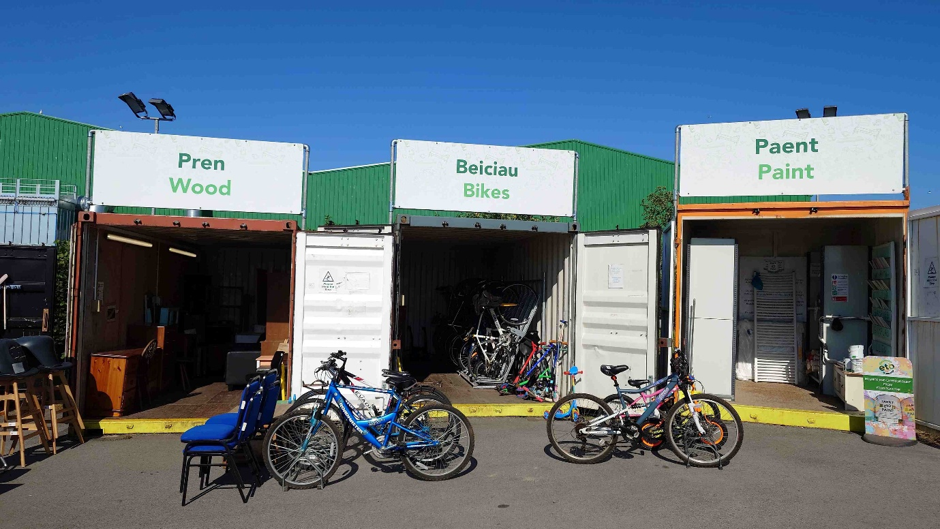
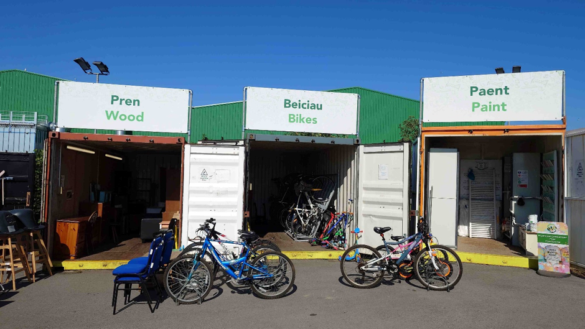
Canolfan Eto – “Wales’ Largest Reuse Village!” at the CWM Environmental site at Nantycaws in Carmarthenshire (Photo: Andy Rees)
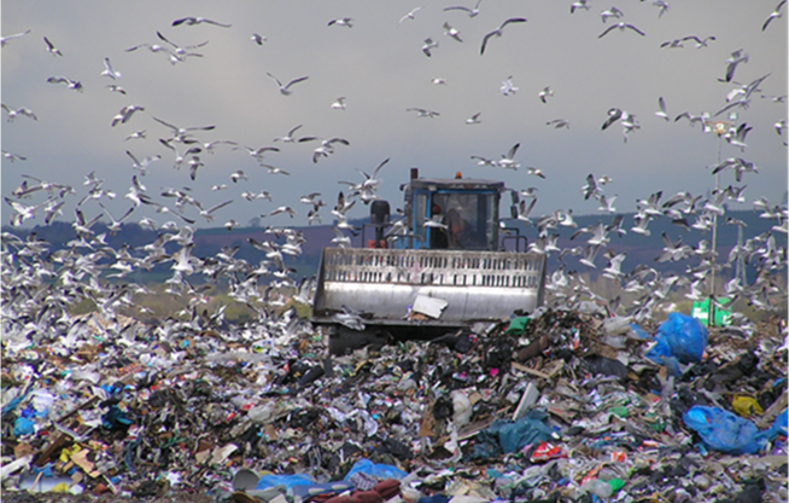
Lamby Way Landfill, Cardiff, mid 2000s. (Photo: Andy Rees)
Climate Wins and Economic Dividends
In terms of the statutory 2050 net zero target set for Wales, the reduction of methane emissions from landfill has been a major success – with a 75% reduction in GHG emissions since 1990. This has resulted from a major reduction in the landfilling of biodegradable waste through the diversion of food waste to anaerobic digestion, garden waste to the production of high quality compost, and separated paper and card into the manufacture of new fibre-based products. Five anaerobic digestion plants were developed in Wales to manage the food waste – producing 7MW of electricity, enough to power around 12,000 homes.
The Welsh Government not only focussed on the quantity of recycling, but also its quality – encouraging a move away from single stream co-mingling for dry recyclables to a multiple separate stream ‘kerbside sort’ approach – providing high quality materials that Welsh manufacturers asked for. The approach has paid significant economic dividends, with many examples of new major investments in reprocessing facilities in Wales, several of which are also UK scale facilities.
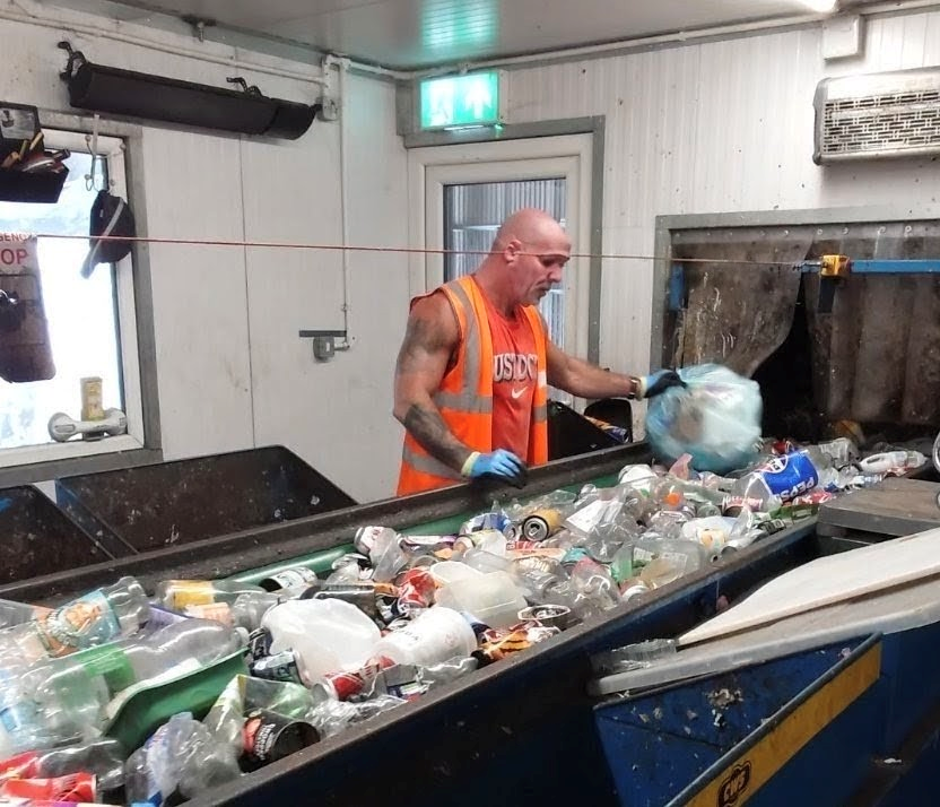
Picking out of ‘survival’ bags of plastic film from the mixed plastics, metal and cartons stream at the Vale of Glamorgan Council recycling sorting station at Barry. (Photo: Andy Rees).
Beyond Recycling: Prevention, Reuse and Repair
But the Welsh Government’s 2021 circular economy strategy, ‘Beyond Recycling’ emphasises the importance of moving up the waste hierarchy towards activities such as waste prevention, reuse and repair. To this end the Welsh Government has supported many ‘beyond recycling’ initiatives – including Fareshare Cumru for surplus food redistribution, Repair Cafe Wales and Benthyg Library of Things.
Read more
- Welsh Government’s Circular Economy Strategy, Beyond Recycling – https://www.gov.wales/beyond-recycling
- Collections Blueprint 2025 – https://www.gov.wales/collections-blueprint-2025
- Collections Blueprint case studies – https://www.wrap.ngo/resources/case-study/welsh-government-collections-blueprint-2025
- Repair and Reuse Activities Evaluation – https://www.gov.wales/repair-and-reuse-activities-evaluation
More actions in this region
- Reduce emissions by 3% each year until 2020
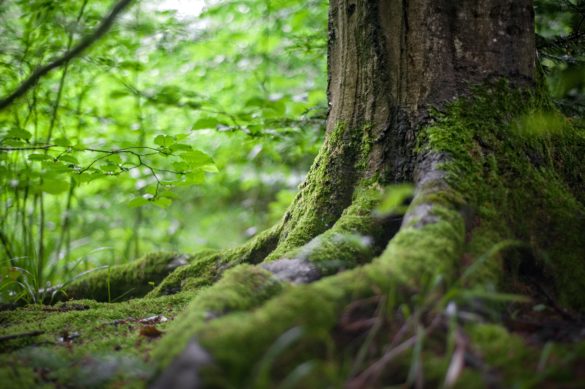
Climate Change Strategy for Wales
Wales, United Kingdom A coordinated approach to tackling climate mitigation and adaptation Wales is- 300 community flood plans
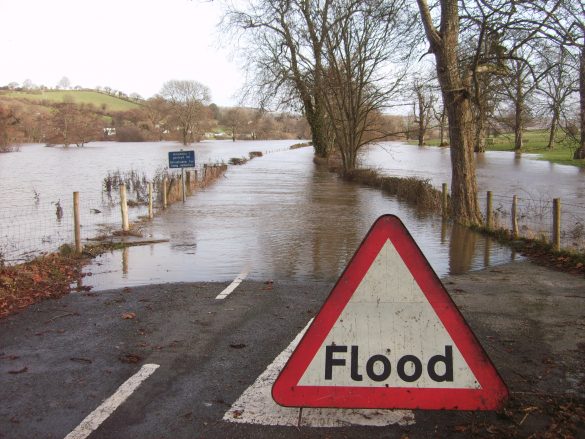
Flood Awareness Wales
Wales, United Kingdom Working with at-risk communities across Wales to raise awareness of flooding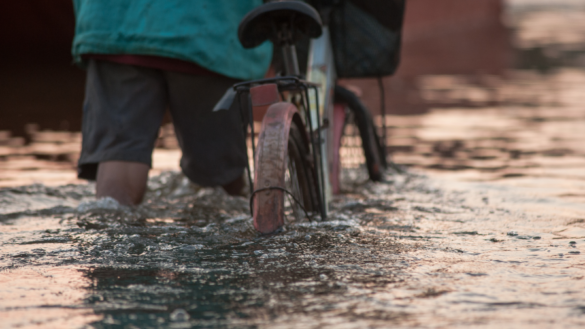
From Policy to Practice: Wales’s Integrated Approach to Climate Resilience
Wales, United Kingdom Guided by pioneering legislation and strong community participation, the Welsh Government- 50 million trees by 2030
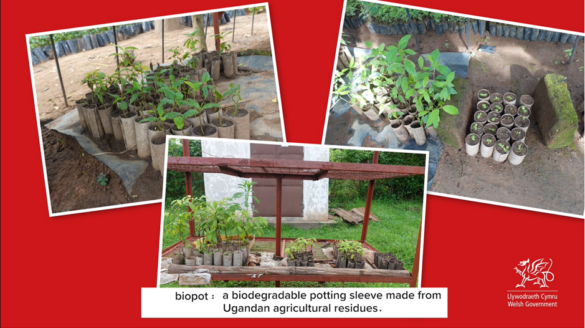
Green Innovation – Welsh Government and Ugandan Partners Pioneer Biodegradable Potting Sleeves
Wales, United Kingdom Transforming Tree Planting in Uganda and Tackling Plastic Waste Crisis The- 46 indicators reported in 2018

Legislating for Sustainable Development in Wales
Wales, United Kingdom The Wellbeing of Future Generations (Wales) Act 2015 Wales is a
The Well-being of Future Generations Act: Wales’ Legislative Framework for Sustainable Development
Wales, United Kingdom The Well-being of Future Generations (Wales) Act (2015) is a landmark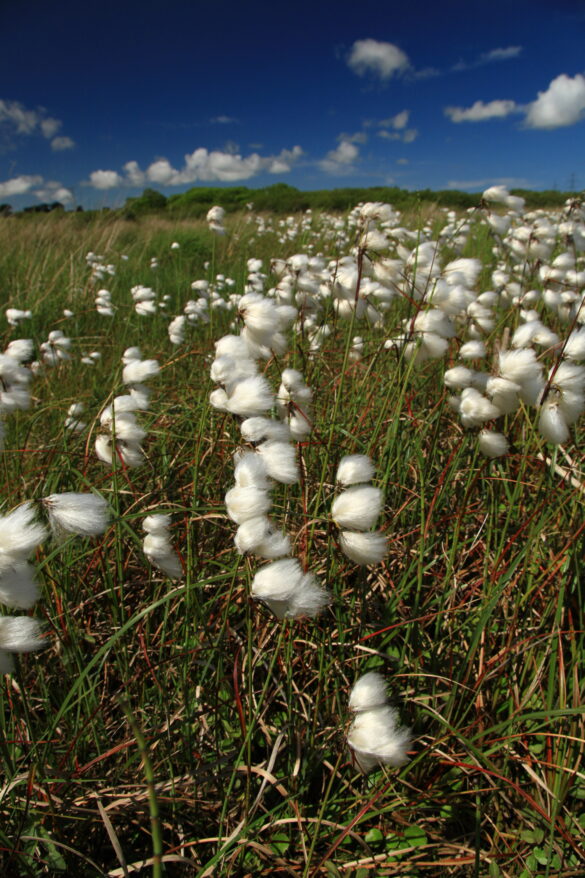
Wales National Peatland Action Programme
Wales, United Kingdom Worldwide, peatlands contain up to one-third of the world’s soil carbon,- Second in the world
Wales’ Circular Economy Journey: From Industrial Revolution to World-Leading Recycler
Wales, United Kingdom Wales built its industrial history on extracting and consuming raw materials- Aiming to distrbute 25 million trees by 2025